
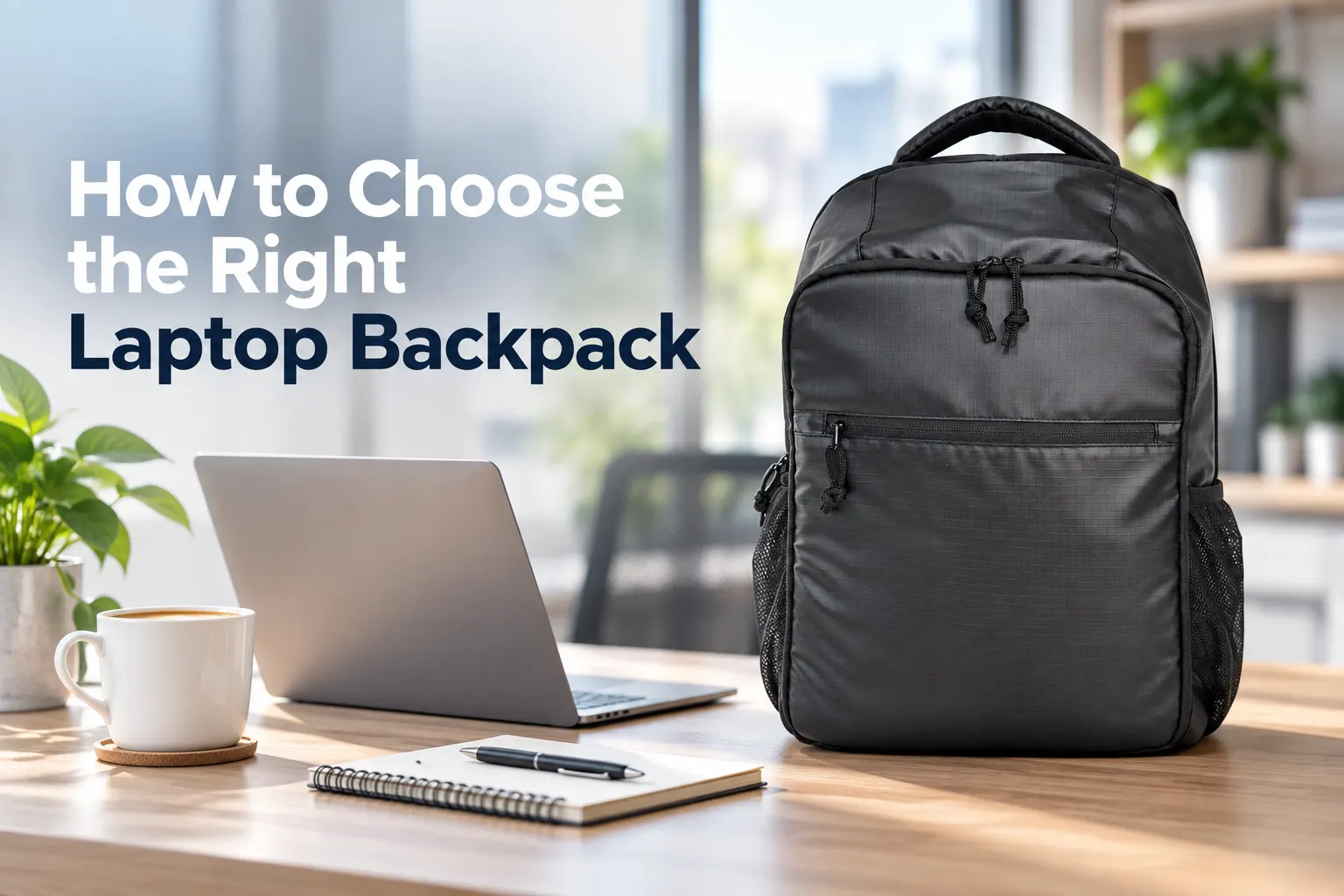
A laptop backpack is more than a bag for carrying a computer. It protects valuable devices, organizes everyday essentials, and makes commuting, studying, or traveling more comfortable.
However, laptop backpacks come in many sizes, materials, and layouts. Choosing the right one depends on how and where it will be used. Here are the most important factors to consider when selecting a laptop backpack.
1. Choose the Correct Laptop Compartment Size
Start by checking the size of the laptop compartment. A backpack designed for a 13-inch laptop may not fit a larger 15.6-inch or 17-inch device.
The compartment should hold the laptop securely without leaving too much empty space. A loose fit allows the computer to move inside the bag, while an overly tight compartment can put pressure on the laptop and zipper.
For most business, school, and everyday markets, compatibility with 15.6-inch laptops is a practical choice. Larger laptop backpacks can also be designed for 17-inch computers and gaming devices.
2. Look for Proper Protection
A good laptop backpack should have more than a simple fabric sleeve. The laptop compartment should include adequate padding on the front, back, and bottom.
A raised or suspended compartment is especially useful because it prevents the laptop from directly hitting the ground when the backpack is put down.
Other protective features may include:
- Soft inner lining
- Shock-absorbing foam
- Reinforced bottom construction
- Secure elastic or hook-and-loop straps
- A separate zippered laptop compartment
A separate compartment also allows users to remove their laptop quickly without opening the entire backpack.
3. Consider the Internal Organization
Modern users often carry much more than a laptop. Chargers, cables, notebooks, pens, headphones, keys, documents, and personal items all need their own storage spaces.
A well-designed laptop backpack may include:
- Zippered interior pockets
- Open organizer sleeves
- Mesh storage pockets
- Pen and accessory slots
- A detachable or fixed key hook
- Separate document compartments
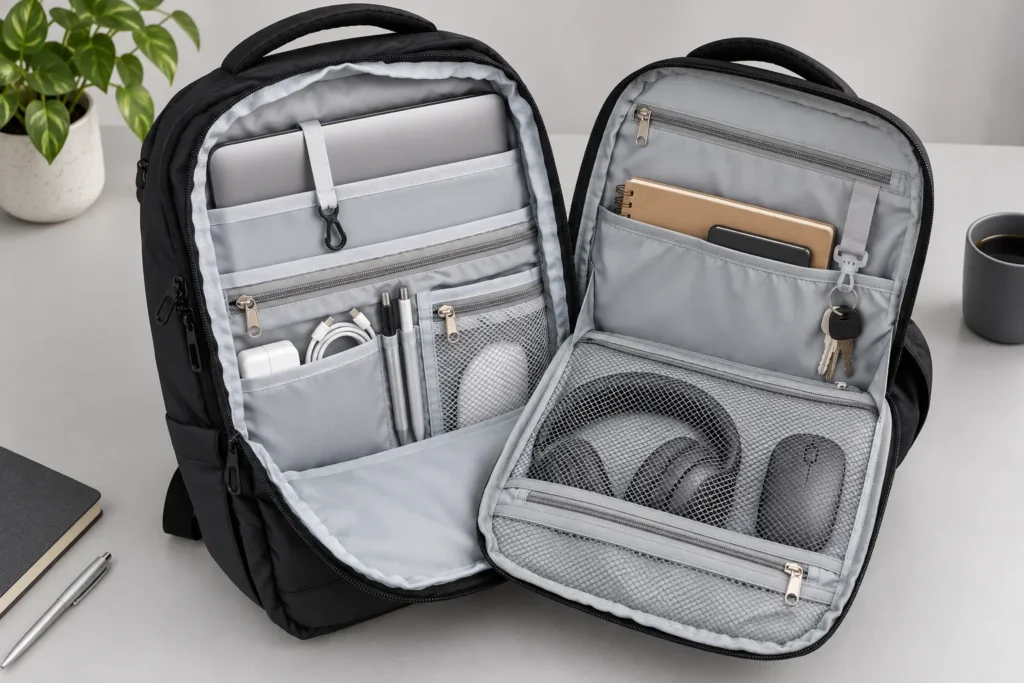
The interior design should keep small items visible and easy to reach. Too many unnecessary pockets can make the bag confusing, so the best layout balances organization with usable space.
Our laptop backpack designs use multiple compartments, zippered pockets, mesh organizers, and convenient key hooks to create a practical storage system for daily use.
4. Select the Right Capacity
The ideal capacity depends on the intended use.
A compact laptop backpack of around 15–20 liters is generally suitable for short commutes and light daily use. A medium 20–30-liter backpack provides additional space for books, documents, a jacket, and other work or school essentials.
For business trips or overnight travel, buyers may prefer a larger design with:
- A spacious main compartment
- A separate laptop section
- Additional clothing storage
- A luggage-handle strap
- Multiple front and side pockets
The backpack should provide enough room without becoming unnecessarily bulky.
5. Pay Attention to Material Quality
The outer material affects the backpack’s appearance, durability, weight, and resistance to everyday wear.
Polyester and nylon are widely used for laptop backpacks because they are durable, lightweight, and available in many textures and colors. Ripstop fabrics are also popular because their reinforced woven structure helps limit tearing.
Canvas can create a more casual or vintage appearance, while coated fabrics are suitable for customers looking for a modern, water-resistant finish.
When comparing materials, consider:
- Fabric density and strength
- Abrasion resistance
- Water resistance
- Colorfastness
- Surface texture
- Ease of cleaning
- Total backpack weight
The zipper, webbing, buckles, lining, and stitching quality are just as important as the main fabric.
6. Check Carrying Comfort
A laptop and its accessories can become heavy, especially during a long commute. Comfortable shoulder straps and a supportive back panel are therefore essential.
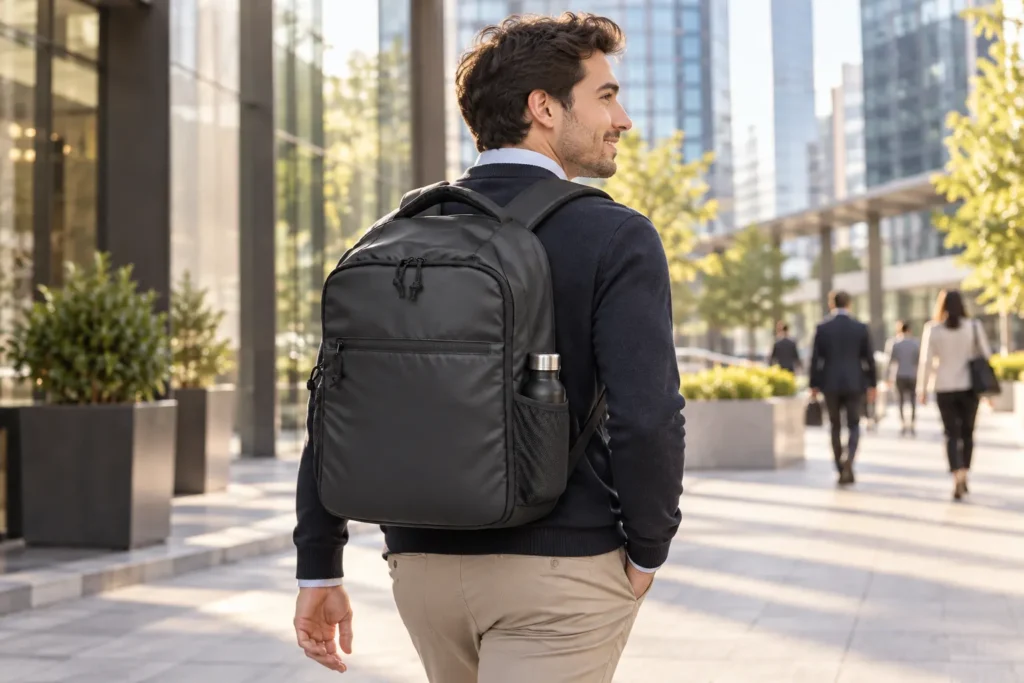
Look for adjustable, padded shoulder straps that distribute weight evenly. Breathable mesh on the straps and back panel can improve airflow and reduce heat during summer or extended use.
A padded top handle also makes the backpack more comfortable to carry by hand.
For larger laptop backpacks, a chest strap can provide additional stability when walking, cycling, or traveling.
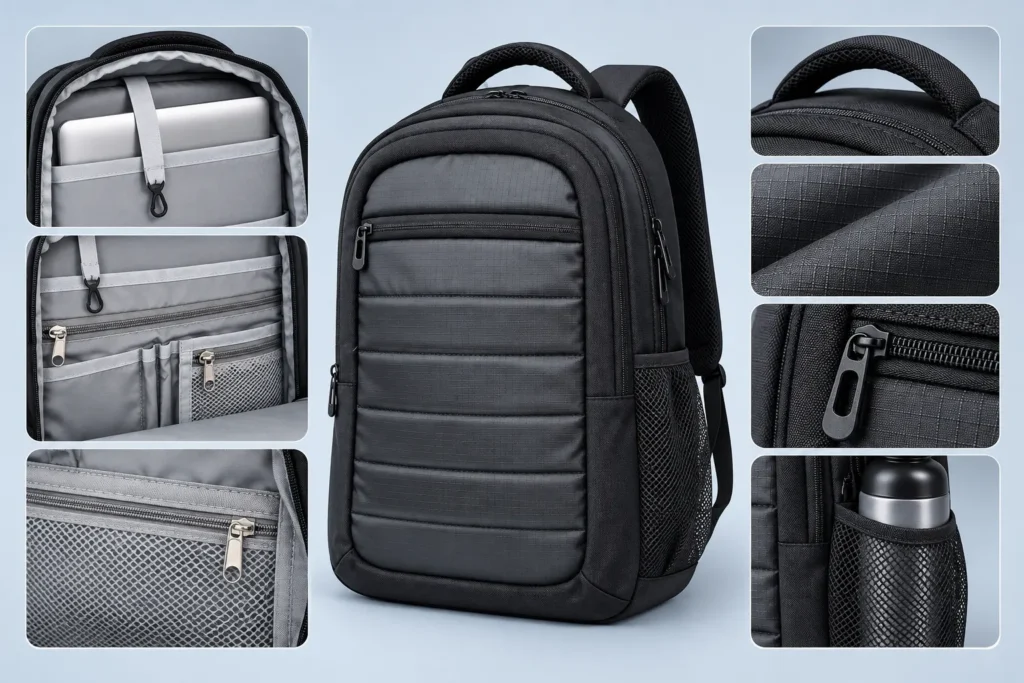
7. Evaluate the Exterior Pocket Design
Exterior pockets should provide quick access without making the backpack look overly complicated.
Useful exterior features include:
- A front zipper pocket for frequently used items
- Side mesh pockets for water bottles or umbrellas
- A hidden back pocket for valuables
- Vertical or horizontal zipper pockets
- Separate quick-access compartments
A clean exterior with practical pocket placement is suitable for both business and casual use. Neutral colors such as black, gray, navy, and khaki are especially versatile for laptop backpacks.
8. Match the Style to the User
The appearance of a laptop backpack should match its intended customer and use.
Business users may prefer a structured shape, simple lines, restrained colors, and subtle branding. Students often need more capacity, stronger organization, and side bottle pockets. Travelers may prioritize large openings, secure pockets, and convenient luggage attachments.
Brands and retailers should consider their target market before selecting the silhouette, fabric, color, and logo method.
Custom logo options can include:
- Screen printing
- Embroidery
- Rubber patches
- Woven labels
- Metal plates
- Debossed or embossed logos
These details help create a distinctive product while maintaining practical performance.
9. Inspect the Construction Quality
Before purchasing or placing a bulk order, inspect the backpack carefully.
Check whether:
- The stitching is straight and secure
- Stress points are reinforced
- Zippers run smoothly
- The shoulder straps are firmly attached
- The lining fits neatly
- The laptop padding is evenly distributed
- The compartments open and close easily
- The backpack stands and carries correctly when loaded
For wholesale or customized orders, samples should be tested with actual laptops and everyday items before mass production begins.
Final Thoughts
The best laptop backpack combines protection, organization, comfort, durability, and appropriate style. A fashionable exterior may attract attention, but the internal structure and construction quality determine whether the backpack performs well in everyday use.
For brands, wholesalers, and retailers, a successful laptop backpack should be designed around the needs of its target customers. Laptop size, capacity, materials, pocket layout, carrying comfort, colors, and logo decoration can all be customized to create a product suited to different markets.
At XIAMEN SUNSHINE ENTERPRISE LTD, we support OEM and ODM laptop backpack production, including customization of fabrics, colors, linings, zippers, compartments, accessories, and logos. Whether you need a compact commuter backpack, a student laptop backpack, or a multifunctional travel model, the right design begins with understanding how the customer will use it.
