
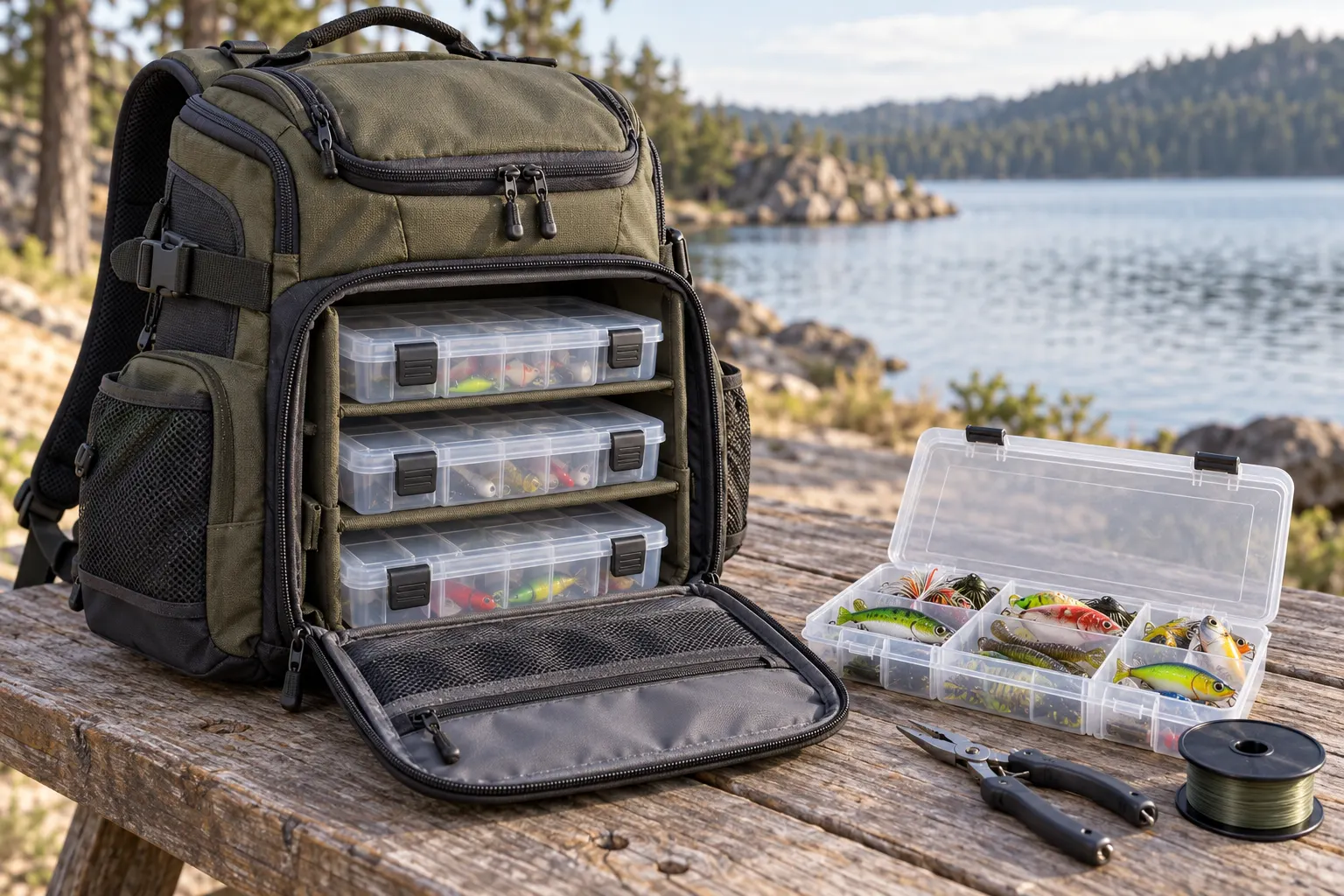
A good fishing backpack keeps your tackle organized, your essentials within reach, and your hands free while you walk to the water. Whether you fish from a riverbank, explore lakeside trails, or spend a day on a boat, the right backpack can make carrying your gear much easier.
With so many designs available, choosing one starts with understanding what you carry and where you fish. Here are the features to consider.
1. Choose the Right Size
Your fishing backpack should hold the gear you need without becoming unnecessarily bulky.
For a short trip, a compact backpack may be enough for a few tackle boxes, spare line, tools, water, and snacks. Longer trips may require extra space for rainwear, additional tackle, and personal items.
Before choosing a size, lay out your usual equipment. Check that the main compartment can accommodate your tackle boxes, especially if you already use a particular box size.
A larger backpack offers more storage, but a smaller, well-organized design can be more comfortable when you travel light.
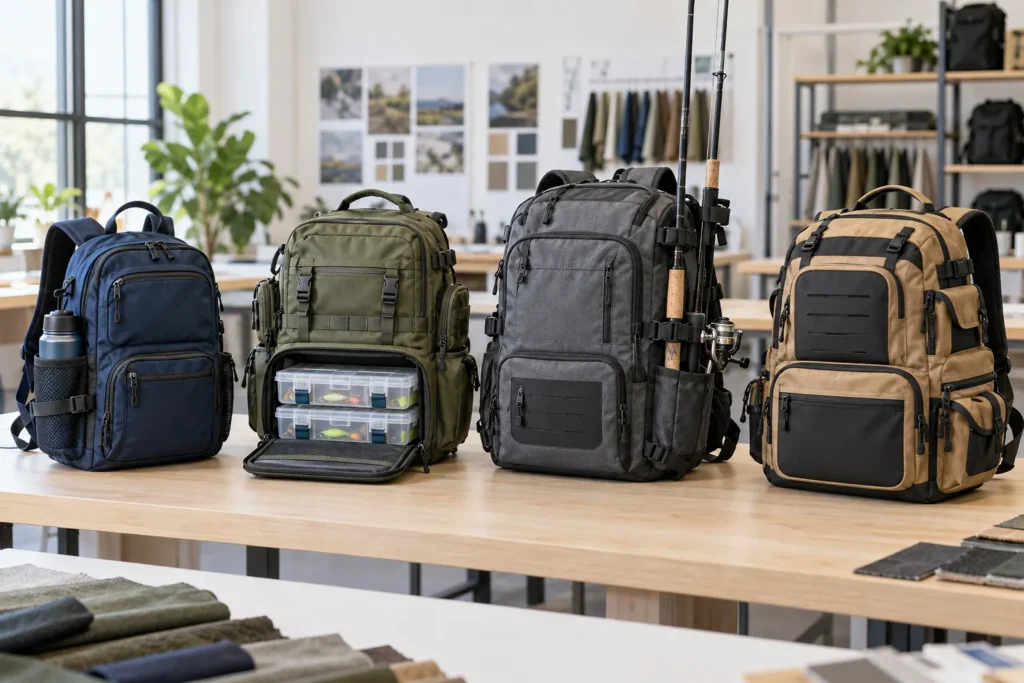
2. Look for Practical Tackle Storage
Good organization helps you spend less time searching through your bag.
A fishing backpack should provide separate spaces for tackle and everyday essentials. Depending on your fishing style, useful features may include:
- A dedicated compartment for tackle boxes
- Small pockets for hooks, weights, and spare line
- Exterior storage for frequently used tools
- A separate pocket for a phone, wallet, and keys
- A bottle holder that is easy to reach
Some backpacks have a front-opening tackle compartment, allowing you to access boxes without unpacking the main section. Removable dividers can also help you adjust the interior as your equipment changes.
Check whether tackle boxes are included with the backpack or sold separately.
3. Understand Water Resistance
Fishing gear is often exposed to splashes, damp ground, and unexpected rain. Choosing the right level of protection matters.
Water-resistant fabric can help protect against light moisture, but it does not necessarily make the entire backpack waterproof. Water may still enter through ordinary zippers, seams, or openings.
If you regularly fish in wet conditions, look closely at the bag’s construction. A rain cover, coated fabric, or water-resistant zipper can provide additional protection. For heavier exposure, consider a purpose-built waterproof design with sealed or welded seams and a suitable closure.
Keep phones, documents, and other moisture-sensitive items in a separate waterproof pouch for added protection.
4. Prioritize Comfortable Carrying
Tackle boxes, water, and other equipment can quickly add weight. Comfortable straps and a supportive fit make a difference, particularly when reaching your fishing spot involves a long walk.
Look for padded, adjustable shoulder straps and a back panel that feels comfortable against your body. A sternum strap can help keep the backpack stable, while a supportive hip belt may be useful for heavier loads.
Pack heavier items close to your back and distribute the weight evenly. Loose equipment that shifts as you walk can make even a well-designed backpack uncomfortable.
5. Check Rod Holders and Tool Attachments
External attachments can free up space inside your backpack and make equipment easier to carry.
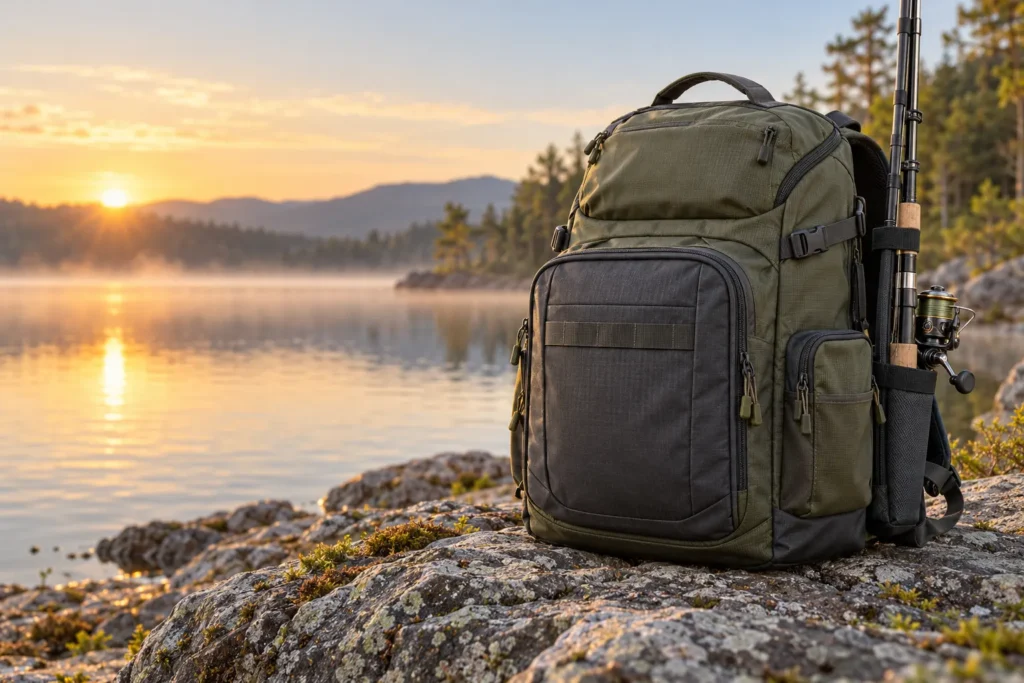
Rod holders are useful when walking to a fishing spot, but they should secure the rod firmly. Check that the holder suits your rod configuration, whether you carry a collapsed rod or separate sections.
Other useful features include plier holders, attachment loops, and net storage. These should be positioned so that tools stay secure without catching on branches or getting in the way.
Avoid leaving sharp hooks exposed on the outside of the bag.
6. Consider Durability and Easy Cleaning
A fishing backpack may be placed on rough ground, carried through vegetation, and exposed to dirt or salt spray.
Pay attention to reinforced stitching, secure strap attachment points, durable zippers, and a sturdy base. These details matter just as much as the appearance of the fabric.
An interior that is easy to wipe clean can also be helpful. Separate wet or dirty equipment from dry clothing and personal items, and allow the backpack to dry thoroughly before storing it.
After use around saltwater, follow the manufacturer’s cleaning instructions to remove salt residue from the fabric and hardware.
7. Match the Design to Your Fishing Style
Different fishing environments call for different priorities.
Bank and Shore Fishing
Comfortable carrying, secure rod storage, and easy-access tackle compartments are useful when you move between fishing spots.
Kayak Fishing
Choose a compact bag that fits the available storage area and can be secured appropriately. Water protection is especially important where splashes are frequent.
Boat Fishing
A stable base and accessible compartments can make it easier to organize your equipment on board. Check that the backpack fits your available storage space.
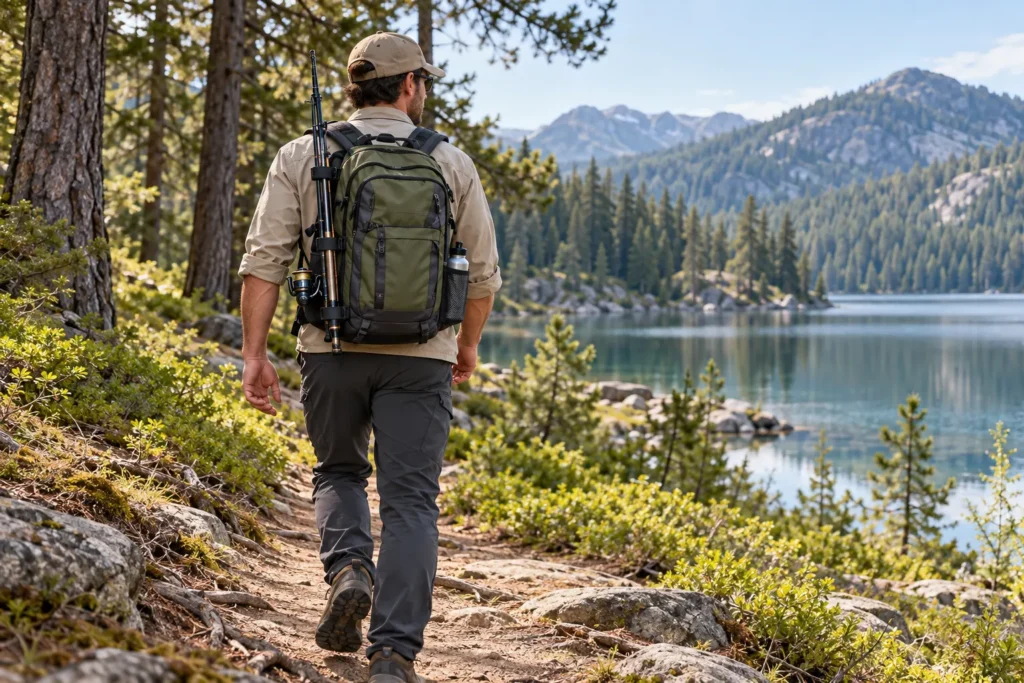
Hiking to Remote Fishing Spots
Prioritize carrying comfort and enough room for water, food, weather protection, and the essentials needed for your route.
Custom Fishing Backpacks for Brands and Retailers
For a fishing brand or retailer, a custom backpack offers an opportunity to develop a product around a specific customer’s needs.
Useful customization options include fabric, colors, lining, zipper pulls, and logo placement. Compartment layouts and external attachments can also be discussed during product development.
Start with the equipment your customers carry. Defining tackle-box dimensions, rod-storage requirements, and the intended fishing environment helps create a more practical design.
At XIAMEN SUNSHINE ENTERPRISE LTD, we manufacture custom bags and backpacks and support customization of fabrics, colors, linings, zipper pulls, and logos. Share your design, reference images, or product requirements with us to discuss your fishing backpack project.

Final Thoughts
The best fishing backpack for you is one that fits your equipment, stays comfortable to carry, and provides suitable protection for the conditions you encounter.
Focus on practical storage, secure attachments, and dependable construction. A thoughtfully chosen backpack keeps your gear organized so you can spend more time enjoying the water.
